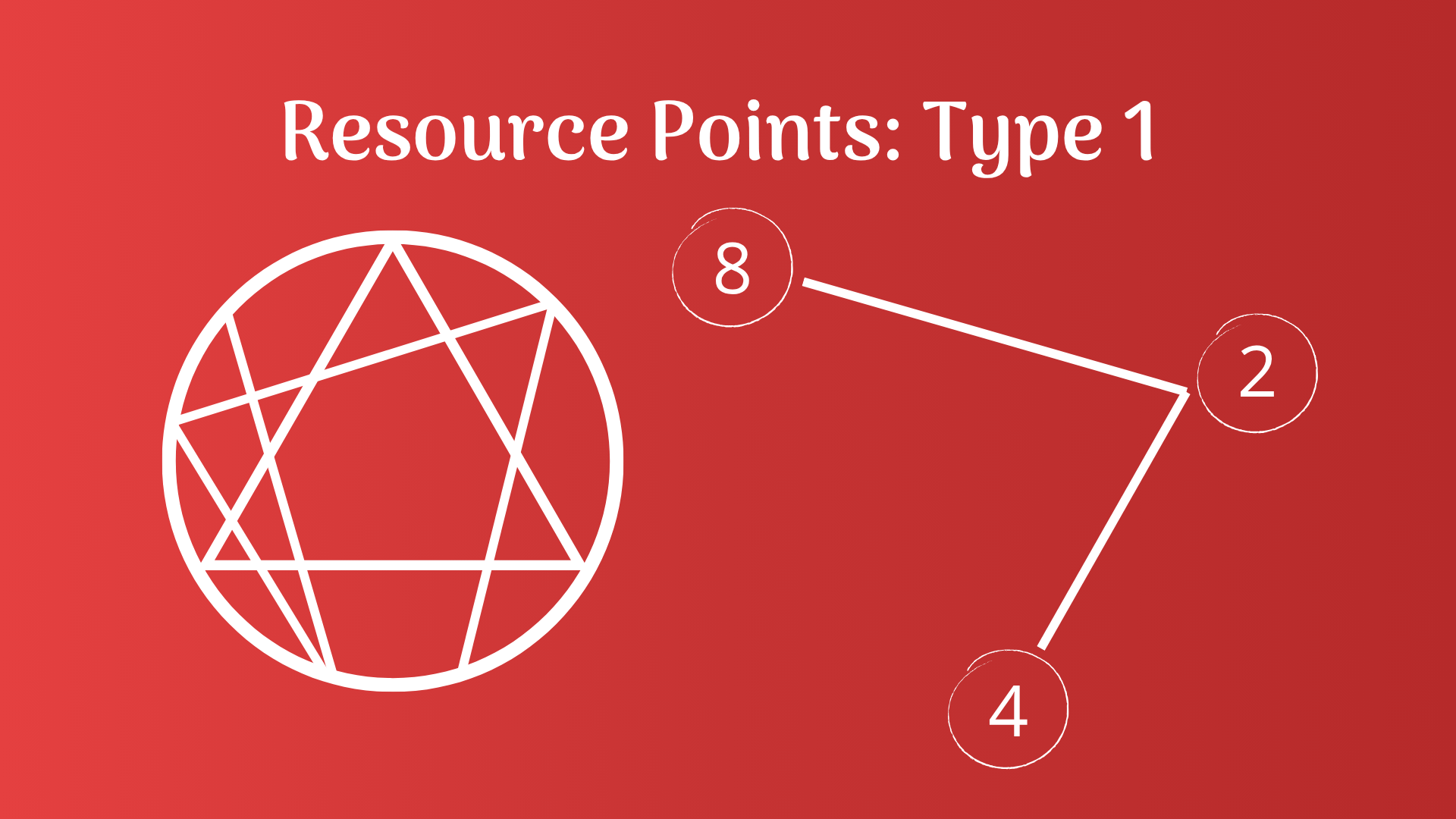
Welcome to the second post in our series on the Enneagram's connecting lines. Last time, we looked at Type 1's Resource Points. Now we're moving on to Type 2. As a reminder, "Resource Points" is the language we're using because it moves us away from thinking of one line as the good one and the other as the bad one, and toward the idea that both territories hold answers to the problems of our home type.
To understand what 2s are drawing on when they move along their lines, it helps to first understand what's happening at home.
Type 2 and the Heart Triad
As members of the Heart Triad, 2s are concerned with connection and image. The type of attention they want to receive from others is love and appreciation (specifically for their giving). Their self-image is that of a "generous person with no needs."
This is an unconscious reversal of reality, because 2s have just as many needs as anybody else. What keeps 2s from fulfillment is the belief that addressing their own needs directly is selfish (and selfish people don't get love from others). This belief causes 2s to repress their own needs so deeply that they can have trouble identifying them.
The result is that 2s see one single option for getting their needs met: "the indirect route." They meet the needs of others in hopes that their own needs will be met in return (though they don't often realize this is the case).
There's palpable irony here: I'd argue that maneuvering others into meeting your unconscious needs is subtly selfish.
In other words, the generosity we see on the outside is tied to a need that's going unspoken on the inside.
Movement Along the Lines: Boundaries and the "Self-Love Allowance"
For 2s, movement along the lines is all about boundary development and increasing their "self love allowance." It's worth noticing the word allowance. The needs are already there. The question is how much a 2 allows themselves to acknowledge them, and to address them directly.
More than anything, 2s must find a way to counter the idea that caring for themselves is a selfish act. Then they are no longer limited to the indirect route for meeting their own needs. When they love themselves first, their altruism has a wonderfully honest ring to it.
All of this becomes possible when 2s access their Resource Points.
Making Conscious Movement
As we discussed in the intro, what makes the lines useful is conscious movement, rather than something that just happens to us. For 2s, the way to achieve conscious movement along the inner lines is to be awake to one's own patterns, and to observe when automatic habit takes over.
Through self-observation, 2s learn to "repeatedly unhook their attention" from the urge to meet others' needs. That word repeatedly matters. The attention gets hooked again and again, and the practice is to keep noticing it and unhooking it, each time it happens.
When they are awake to themselves and present in the moment, they get the best of their Resource Points.
Point 8
Here, 2s find their anger, and use it to build personal boundaries. They stop "giving themselves away" for love and approval.
Remember that 2s are working from the belief that addressing their own needs is selfish, and that selfish people don't get love. Point 8 is where that belief starts to loosen its grip. They find themselves able to develop and enforce personal boundaries when they draw on their resources at point 8.
Point 4
Here, 2s find the ability to consider their own feelings and needs, rather than focusing exclusively on those of others. They find nourishment through self-love.
Remember that 2s repress their needs so deeply that they can have trouble identifying them. Point 4 is where that starts to change. Drawing on their resources at point 4, 2s learn to look within, so they can identify and meet their own needs, and know that it's not selfish to do so.
When Boundaries and Self-Love Get Complicated
Generally speaking, point 4 is the growth point for 2s, and tends to light up when they're feeling expansive. Point 8 is the stress point, and tends to light up when they're feeling contracted. But because each Resource Point holds a full range, neither one is automatically a smooth ride (or automatically a rough one). Remember, we're not sorting these into "good" and "bad."
At point 8, the anger and the boundaries can show up in less conscious ways. After so much time spent giving themselves away, the anger can arrive all at once, and the boundaries can go up suddenly and forcefully, rather than being built steadily. And since the belief that caring for yourself is selfish is still around, guilt can follow close behind. When 2s are awake and present, though, point 8 is what we described above: finding the anger, and using it to build personal boundaries that stop the giving away of the self.
At point 4, the invitation to look within can go sideways too. Self-love can feel like self-indulgence, which is just the "selfish people don't get love" belief showing up again. Or 2s can identify their needs, but then wait for others to notice and meet them, which is the indirect route all over again. With conscious movement, point 4 is where 2s find nourishment through self-love, and meet their own needs directly.
This is exactly why conscious movement matters so much. Both points hold the full range, and self-observation is what helps 2s draw on the healthier end of each.
Boundaries and Self-Love: Two Resources, One Pattern
Taken together, the two Resource Points address the two sides of the pattern we started with. Point 8 offers the boundaries that stop the giving away of the self. Point 4 offers the self-love allowance that lets 2s identify and meet their own needs. Neither asks a 2 to stop being generous, and neither is a "reward" or a "punishment." They're two territories where 2s can find what their home type has a hard time granting itself.
Questions to Sit With
If you're a 2, or you love one, here are a few questions drawn from everything above:
Right now, in this moment, what do I need?
When I give, am I hoping something comes back to me?
Where could I build a boundary, without giving myself away for love and approval?
The Takeaway for Type 2
It's possible to help others, lead with generosity, AND "help yourself first" by maintaining personal boundaries and directly addressing personal needs.
Next up in the series, we'll move on to Type 3 and explore their Resource Points. If you’d like to explore Type 2 growth themes more deeply, check out our monthly support groups held on the first Monday of each month or our next monthly workshop. You can learn more and register here.